India Guide
Understanding India
India is easier to visit than it is to explain.
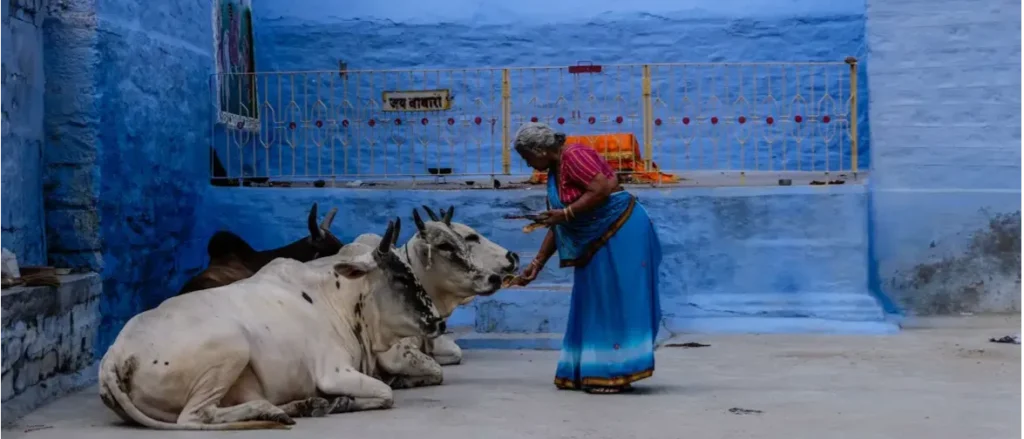
Courtsey: Unsplash
To travel through India is to move between worlds. The landscape changes, the food changes, the languages change, the architecture changes — and sometimes even the way people understand family, religion and everyday life changes, often within a single day’s drive.
That can feel overwhelming for a first-time visitor.
But there are threads connecting all of it, and once you can see them, India stops feeling like a country of disconnected surprises and starts feeling like something coherent — a civilisation still explaining itself, region by region.
This guide is my attempt to hand you those threads before you need them, rather than after.
The geography that shaped everything
Geography in India is not background scenery. It is closer to a cause, with almost everything else — cuisine, architecture, clothing, trade routes, even temperament — sitting somewhere downstream of it.
The country holds an extraordinary range of terrain inside one set of borders: the Himalayas along the north, the fertile Indo-Gangetic plains beneath them, the Thar Desert to the west, the Deccan Plateau across the centre and south, the Western and Eastern Ghats framing two very different coastlines, and — often left off the mental map entirely — the mountainous, forested Northeast, distinct from the rest of the country in almost every way.
Layered over all of it is the monsoon, which arrives on its own schedule and has shaped Indian agriculture, festivals and daily rhythm for millennia.
That’s the shape of the argument this whole guide keeps making: geography sets the conditions, and culture is what people build in response to them. Understand the land first, and a great deal of what follows — why Rajasthan looks the way it does, why the south eats the way it does — stops needing to be memorised. It starts making sense on its own.
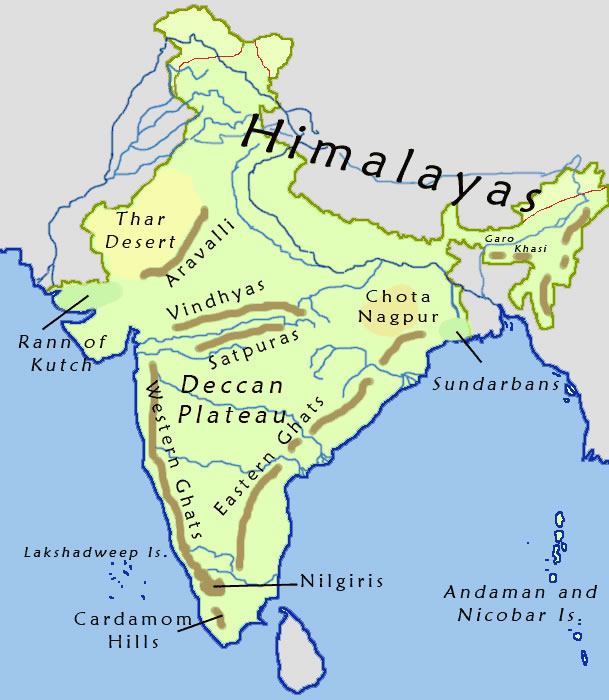
Map — India’s geographic regions
Layers of history you can still see
India’s history is not really one story. It’s several civilisations layered on top of each other, each leaving something behind that the next one built on rather than erased.
Ancient India gave the subcontinent its earliest cities and philosophical traditions. The Mauryan and Gupta periods produced some of its first unifying empires and enduring artistic and scientific achievements. Regional kingdoms rose and fell for centuries, each leaving distinct architecture and identity behind. Islamic dynasties and, later, the Mughal Empire reshaped huge parts of the country — administratively, architecturally and culinarily. European trading powers arrived for spices and stayed for territory, culminating in nearly two centuries of British rule. Independence in 1947 came bound together with Partition, one of the largest and most painful mass migrations in human history. And modern India has spent the decades since building a democracy across more diversity than almost any other country on earth has had to manage at once.
The useful question, as a traveller, isn’t “what happened in this period” so much as: what from this period can I still see today?
Mughal history is visible in architecture, gardens, language and food. The British period left railways, hill stations, civic architecture and institutions that still run the country. Ancient traditions are visible every time you pass a temple, a pilgrimage route, or a philosophical debate still being had the way it was centuries ago. History in India isn’t behind glass. It’s still being lived in.
History in India isn’t behind glass. It’s still being lived in.
Why India has so many Indias
People sometimes arrive expecting “Indian culture” the way they might expect “French culture” or “Japanese culture” — a single coherent thing with regional variations at the edges.
India doesn’t really work that way.
It’s closer to a civilisation made up of many regional cultures — different languages, religions, ethnic communities, cuisines, clothing traditions and architectural styles — that have been trading, marrying, governing and occasionally fighting each other for thousands of years. The result isn’t a single culture with variations. It’s several cultures that have learned to coexist inside one set of borders, each still recognisably itself.
That’s why the same word — “Indian” — can describe a Rajasthani desert trader, a Bengali poet, a Keralan fisherman and a Naga hill farmer, with almost nothing in common between them except the passport.
Once you expect that variety instead of being surprised by it, India gets much easier to enjoy.
Religion and everyday life
India is home to Hindu traditions, Islam, Sikhism, Christianity, Buddhism, Jainism and several smaller traditions, often within walking distance of each other in the same neighbourhood.
What surprises most visitors isn’t the number of religions. It’s how little separation there is between religion and ordinary life. Pilgrimage, temple visits, sacred rivers, festivals and daily rituals aren’t confined to special occasions — they’re woven through the everyday in a way that can feel unfamiliar if you come from a more secular culture.
What you’ll notice
Why people touch an elder’s feet as a greeting. Why certain rivers are treated as sacred rather than simply scenic. Why a single festival can transform an entire city’s traffic, noise and rhythm for days. None of this is performance for visitors — it’s how the country actually runs.
You don’t need to understand the theology to appreciate what you’re seeing. You just need to know that it isn’t decoration.
Why the food changes with the land
“Indian food” isn’t really one cuisine any more than “Indian culture” is one culture. What most people abroad think of as Indian food is usually one regional tradition, exported and generalised.
An arid state builds its cooking around what survives drought and stores well. A coastline builds its cooking around fish, coconut and the spice trade that came with centuries of maritime contact. A river plain builds its cooking around what grows abundantly where water is never scarce. Religious traditions add another layer entirely, shaping what’s eaten, when, and by whom.
None of this is arbitrary. Every regional cuisine in India is a fairly direct answer to the question “what does this land make possible?” — which is exactly why the food changes as dramatically as the landscape does, sometimes within a few hundred kilometres.
People, hospitality and social life
Hospitality in much of India isn’t a service industry. It’s closer to a social obligation — a guest is traditionally treated as something closer to family than customer, and that instinct runs deep enough that it shapes how strangers are treated on trains, in homes and in small-town interactions generally.
That same warmth comes with directness that can catch first-time visitors off guard: questions about marital status, income, or exactly why you’re travelling alone are often not intrusive by local standards — they’re simply how people show interest in each other. Bargaining, likewise, isn’t a hostile transaction; in many contexts it’s closer to a expected social ritual than a conflict.
A question you’ll hear constantly
“Where are you from?” It gets asked so often that visitors sometimes find it wearing — but it’s rarely idle small talk. It’s usually genuine curiosity, and often the opening move of a conversation someone actually wants to have with you.
A country of many languages
India doesn’t have one national language in the way many countries do. It has dozens of major languages across several distinct language families, and hundreds more spoken regionally — Hindi, Bengali, Marathi, Gujarati, Tamil, Telugu, Malayalam, Kannada, Punjabi and Urdu among the largest, each with its own literature, cinema and centuries of history.
You don’t need to learn an Indian language to travel through India comfortably — English is widely spoken, especially in cities and tourist areas. But knowing that this linguistic diversity exists explains a lot of what else you’ll notice: why signage, music, and even the rhythm of conversation can feel completely different a few states apart.
India and the traveller
Everything above is context. This is the practical layer — the things that make the first few days easier.
- Sensory intensity. Crowds, traffic, noise and colour arrive all at once, especially in cities. It settles faster than most people expect.
- Personal space works differently in crowded public settings than many visitors are used to — it isn’t rudeness, it’s density.
- Shoes and dress. Shoes come off before entering temples, mosques and many homes. Modest dress is appreciated at religious sites regardless of the weather.
- Bargaining is expected in markets and with unmetered transport, not in shops with fixed price tags.
- Trains are one of the best ways to actually see the country, not just a way to get between two points.
- Money and connectivity. Cash still matters outside major cities alongside digital payments; a local SIM or eSIM makes the trip considerably easier.
- Photographs of people are best taken with a quick ask first — almost always granted, and it changes the interaction for the better.
None of this needs to be memorised before you land. It just helps to know it’s coming.
This is the foundation. The regions — starting with Rajasthan — are where the story gets specific.
Planning an actual trip through India or Oman, and want someone who explains as much as they show? Message me on WhatsApp.