India Guide · South India · Deep Dive
Kerala: Where the Mountains Meet the Arabian Sea
Kerala is a narrow land caught between mountains and sea. That’s the sentence the whole guide grows out of.
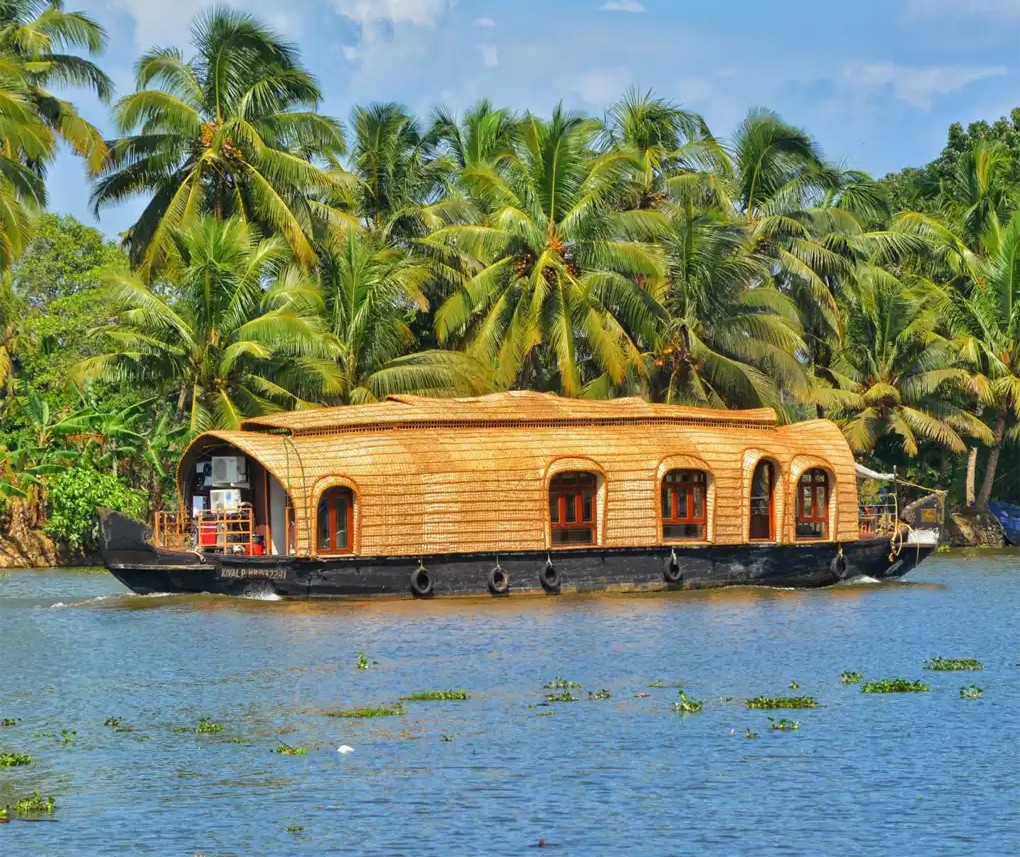
Photo — backwaters or coastline, wide (21:9)
In this guide
- Between the mountains and the sea
- What the mountains make possible
- Why the world came by sea
- Kochi: a port where the world came ashore
- Backwaters: a way of life first
- You can taste this geography
- Forests, medicine and the Kerala way
- Culture in a narrow corridor
- Kerala’s performing arts
- Modern Kerala: the Gulf, and back again
- Travelling Kerala
South India’s guide told the bigger story — the monsoon, the peninsula, the sea. Kerala is where one very specific version of that story played out, more completely and more visibly than almost anywhere else on the coast, shaped by a single geographic fact more than anything else.
This is a long guide, deliberately. Kerala rewards depth — there’s a reason people who visit once tend to come back with more questions than they arrived with.
Between the mountains and the sea
Kerala sits on India’s southwestern edge: the Arabian Sea to the west, the Western Ghats rising sharply to the east, Tamil Nadu beyond that range to the east and southeast, Karnataka to the north. What’s left in between is a narrow coastal strip — in places barely sixty kilometres wide — tropical, humid, and soaked by two separate monsoons a year rather than one.
That’s the whole geography in a sentence: mountains on one side, sea on the other, not much room in between. Almost everything else in this guide is a consequence of that fact.
Two monsoons, not one
Most of India experiences a single monsoon season. Kerala gets two: the southwest monsoon arrives first, usually in early June, and is the one that defines the state’s reputation for rain — dramatic, sustained, sometimes relentless for weeks. A second, gentler northeast monsoon follows in October and November. Between them, Kerala receives some of the highest rainfall totals anywhere in India, and that rainfall is the real starting point for almost every chapter that follows.
Forty-four rivers originate in or flow through Kerala, nearly all of them running from the Western Ghats down to the Arabian Sea across that narrow strip of land. None of them are especially long by Indian standards — the geography doesn’t allow it — but their density, and what they’ve built along the way, matters more than their length.
What the mountains make possible
The Western Ghats rise steeply behind Kerala’s coastal strip, catching the monsoon before it can travel further inland. That produces heavy rainfall, dense forest, a network of rivers, and — at higher elevations — a completely different set of growing conditions from the coast below. The range is old enough, and isolated enough in places, that UNESCO recognises it as one of the world’s eight “hottest hotspots” of biological diversity, a status this guide comes back to later.
This is where tea, coffee, cardamom, pepper and Kerala’s other well-known spices come from. Not because Kerala simply “grows spices,” but because this particular combination of altitude, rainfall and soil, all produced by the Ghats, created the conditions in which spices could flourish. The plantations came later. The geography came first.
Pepper: the vine that started everything
Black pepper is native to Kerala’s highlands, and for most of recorded history, this was the only place in the world it grew. The vine climbs other trees for support in the humid, shaded conditions of the Western Ghats’ lower slopes — it doesn’t grow in open fields the way most spices do, which is part of why cultivation here stayed a highland, forest-edge activity for so long. Pepper’s value on the other side of the world, for over a thousand years, is really the origin point of everything in the next two chapters.
Cardamom, tea and the highland economy
Cardamom, grown at higher elevations under natural forest canopy, developed alongside pepper as one of the region’s original valuable exports — it’s still often called the “queen of spices,” in the same way pepper earned the nickname “black gold.” Tea and coffee are more recent arrivals by comparison: tea cultivation in the Munnar highlands dates largely to the late 19th century, when British planters — and later the Tata family’s Kannan Devan Hills operation — cleared and terraced huge stretches of high-altitude forest into the plantation landscape visitors see today. Rubber came later still, spreading across Kerala’s mid-elevation zones through the 20th century and becoming one of the state’s most significant modern cash crops.
Why the world came by sea
Spices grown in the highlands are only valuable if someone, somewhere else, wants them badly enough to travel for them — and for most of history, people did. That demand turned Kerala’s coast into one of the busiest stretches of the Arabian Sea trading world, drawing merchants from across the Indian Ocean and connecting this narrow strip of land to a genuinely global network centuries before “globalisation” was a word anyone needed.
Muziris and the ancient trade
Long before Kochi existed as a major port, there was Muziris — mentioned in Roman and Greek trading accounts, including the Periplus of the Erythraean Sea, as one of the great pepper ports of the ancient world. Roman ships are recorded sailing here using the predictable monsoon winds, trading gold and wine for pepper and gems, and Muziris’s exact location, likely near modern Kodungallur, remained the region’s dominant port for centuries. It was eventually lost to a massive flood in the 14th century that silted up the harbour — an event significant enough that it reshaped the entire region’s trading geography, pushing commercial power toward Kochi and Kozhikode instead.
The monsoon as a trading schedule
None of this ancient trade was accidental or occasional. Sailors on the Arabian Sea learned to use the monsoon winds as a predictable seasonal engine — sailing east toward India on one set of winds, and back west toward Arabia and the Red Sea on the reversed winds months later. That predictability is part of why this particular sea route became one of the most reliable, most heavily used trading corridors in the pre-modern world, centuries before anyone had a compass.
A highway, not a boundary
The Arabian Sea didn’t separate Kerala from Arabia — it connected them. Oman sits in exactly that maritime world, and the same sea that carried pepper and cardamom west for centuries still ties Kerala and the Gulf together today, in ways this guide comes back to later.
Kochi: a port where the world came ashore
The sea didn’t just bring goods to Kerala’s coast. It brought people — and nowhere absorbed more of them, or held onto more of their traces, than Kochi.
Before Kochi: the rise of the Zamorins
After Muziris silted up, trading power on this coast shifted north to Kozhikode (Calicut), ruled by the Zamorin, and south to the newly prominent harbour town of Kochi. The Zamorins built Kozhikode into one of the era’s great trading cities, hosting merchants from across the Indian Ocean world — the 14th-century traveller Ibn Battuta described it as one of the finest ports he’d seen anywhere. Arab, Chinese and Southeast Asian traders all called regularly at these Malabar ports, and by the time European ships arrived, they were entering a commercial system that had been running smoothly, and profitably, for centuries without any help from them.
A community that predates Europe’s arrival
Jewish merchants and settlers arrived on this coast in waves stretching back, by tradition, well over a thousand years — some accounts trace the community’s roots to trade contact even earlier than that. What’s certain is that a substantial, settled Jewish community existed in and around Kochi long before any Portuguese ship reached India. The Paradesi Synagogue in Kochi’s Mattancherry district, built in 1568, is one of the oldest active synagogues in the Commonwealth, and the surrounding “Jew Town” quarter — its narrow lanes still lined with old spice warehouses — was the community’s commercial and religious centre for centuries. Most of Kochi’s Jewish community emigrated to Israel after 1948, and only a small number remain today, but the synagogue, the cemetery and the quarter itself still stand as a genuinely rare thing: physical evidence of a Jewish diaspora community that thrived, rather than merely survived, on India’s coast for the better part of two millennia.
1498: Vasco da Gama and the Portuguese arrival
When Vasco da Gama’s ships reached the Malabar coast near Kozhikode in 1498, they weren’t discovering a trade route — European sailors had simply found their own way into a network that Arab, Indian and Chinese merchants had operated for centuries. What Portugal wanted was control, not just access: over the following decades they built forts, fought naval battles with Arab and local fleets, and established Kochi as their first major foothold on the Indian coast, protected by the local ruler in exchange for Portuguese military support against the rival Zamorin. Fort Kochi takes its name, and much of its early layout, from this period — the Basilica of Santa Cruz and St. Francis Church, where Vasco da Gama himself was originally buried before his remains were later moved to Portugal, both date to this Portuguese-controlled century.
The Portuguese did not discover Kerala. They arrived in an already-established trading system.
Dutch Kochi, and then British influence
Portuguese control lasted a little over a century before the Dutch East India Company, expanding aggressively across Indian Ocean trade routes, took Kochi by force in 1663. Dutch rule brought its own layer of architecture and administration, though it was generally shorter and less culturally embedded than the Portuguese period before it. By the late 18th century, British influence was displacing the Dutch across the Malabar coast, eventually folding the region into British India directly, while the neighbouring kingdoms of Travancore and Cochin retained internal self-rule as princely states under British paramountcy — an arrangement that lasted until Indian independence in 1947, when Travancore, Cochin and Malabar were eventually combined to form the state of Kerala in 1956, organised along linguistic lines like most of modern India’s states.
Once you know this sequence, Fort Kochi stops being a pleasant old neighbourhood and starts reading as a physical timeline: Portuguese churches, Dutch-era buildings, British colonial architecture, the Chinese fishing nets that some accounts trace to Chinese traders under the Kublai Khan-era explorer Zheng He, the old spice warehouses, and the Jewish quarter — all genuinely different worlds, standing within walking distance of each other because the same sheltered harbour kept drawing new arrivals, century after century.
Why Kochi, and not somewhere else
A sheltered natural harbour on a coast already tied into Indian Ocean trade made Kochi the obvious meeting point once Muziris silted up — not an arbitrary spot on a map, but the natural consequence of geography plus centuries of maritime traffic passing this exact stretch of coastline.
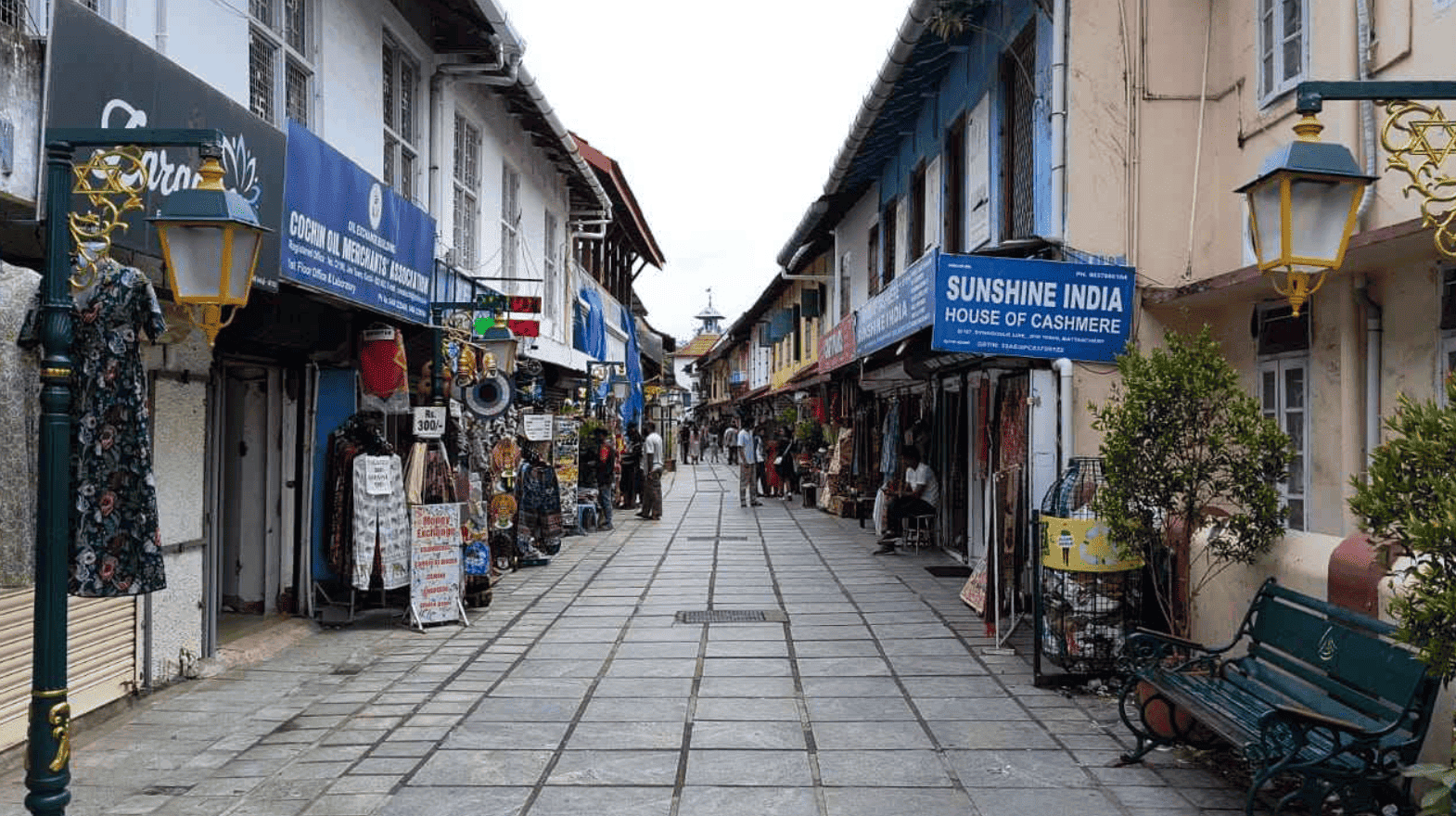
Jewish Quarter Kochi
Backwaters: a way of life first
The same coastline that enabled international trade also built an entirely different, more local kind of life: fishing communities, seafood cuisine, boats and coastal settlements strung along the shore.
But Kerala’s water doesn’t stop at the coast. Behind it lies an extraordinary network of rivers, lagoons, canals and lakes — the backwaters — created by the same rainfall and river systems that feed everything else in this guide. For centuries, this network was Kerala’s transport system, its fishing ground, and the foundation of its rice economy in low-lying areas, long before it was anyone’s holiday photograph.
Kuttanad: farming below sea level
The most striking expression of this water-based life is Kuttanad, a region of paddy fields that sit, in places, several feet below sea level — among the very few places on Earth where farming happens below sea level without coastal reclamation on the scale of the Netherlands. Generations of Kuttanad farmers built and maintained networks of bunds and channels to keep the sea and the backwaters out of the fields while still using the same water system for irrigation and transport. It’s an extraordinary piece of vernacular engineering, built by farming communities rather than colonial administrators or modern engineers, and it’s still functioning largely the same way today.
Snake boats and the memory of the water highway
Before roads reached deep into this landscape, canals were the highway, and boats were how everything — people, rice, spices, timber — actually moved. That history survives most visibly today in Vallam Kali, Kerala’s snake boat races, where enormous Chundan Vallam boats, some carrying more than a hundred rowers, race down the backwaters to huge crowds each August. The most famous, the Nehru Trophy Boat Race, draws visitors from around the world, but it grew out of something much older and more practical than a sporting event: village boats built for real, everyday water transport, raced against each other long before anyone thought to call it a tourist attraction.
The houseboat experience travellers know today is a modern adaptation of this much older water-based way of life — not an invention for tourism, but a continuation of one, using boats descended from the same rice-transport barges (kettuvallam) that once carried Kuttanad’s harvest to market.
You can taste this geography
Kerala’s food is built directly from everything already established: rice and coconut from the wet lowlands, seafood from the coast, spices from the highlands, and centuries of trade adding new ingredients and influences on top.
The sadya: a meal that tells the whole story
Nowhere is this clearer than in the sadya, the traditional vegetarian feast served on a banana leaf, especially during the Onam festival. A proper sadya can run to more than twenty dishes — rice at the centre, then a careful sequence of sambar, rasam, avial, thoran, pachadi, pickles and payasam for dessert — each dish contributing rice, coconut, vegetables and spices in a different combination, eaten in a specific order that’s been passed down more or less unchanged for generations. It’s less a meal than a demonstration: everything this landscape can grow, on one leaf.
The coast and the highlands, on a plate
Move toward the coast and fish takes over — karimeen (pearl spot) pollichathu, wrapped and cooked in banana leaf, is one of the dishes most associated with the backwater region specifically, alongside a wide range of other seafood shaped by whatever the day’s catch brings in. Malabar cuisine in the north carries a heavier Arab and Mughal influence, visible in dishes like Malabar biryani, layered with fried onions and cashews in a style distinct from biryani found elsewhere in India. Syrian Christian households in central Kerala developed their own meat-forward tradition — duck roast, beef fry, and appam (a soft, lacy rice pancake) served with a mildly spiced stew are staples of this particular community’s table.
Toddy — a mildly alcoholic drink tapped from coconut or palm flowers — has its own dedicated toddy shops across the state, usually paired with simple, punchy dishes like spicy fried fish or beef curry, and remains one of the more distinctly local drinking traditions in India.
Coconut in particular appears in nearly everything — cooking oil, milk, sweets, everyday household use, coir crafts, even religious ritual — not as a random ingredient, but as the inevitable result of a tropical, coastal climate with abundant rainfall. Once the geography is in place, coconut is less a choice than an outcome.
Forests, medicine and the Kerala way
The same rainfall and mountain geography that produces Kerala’s spices also produces its exceptional biodiversity — dense forest, a wide range of wildlife, and pockets of ecosystem found almost nowhere else on Earth.
A biodiversity hotspot, not a backdrop
Periyar Tiger Reserve, built around an artificial lake, is one of the more accessible places to encounter this landscape directly — elephant herds coming down to the water, boat safaris across still water surrounded by forest, and, less visibly but just as importantly, one of India’s key tiger conservation zones. Silent Valley National Park, further north, protects one of the last substantial stretches of untouched tropical rainforest in the Western Ghats — it exists today largely because of a determined conservation movement in the 1970s and 80s that stopped a proposed hydroelectric dam, one of modern India’s most significant environmental victories. Together with Wayanad’s forests further inland, this stretch of the Ghats shelters species found almost nowhere else, including the lion-tailed macaque and the Nilgiri tahr.
Ayurveda: one expression among several
That same relationship between people and the natural world — an intimate, practical knowledge of plants, herbs and the rhythms of a tropical climate — is also part of what shaped Kerala’s Ayurvedic tradition, one expression among several of a much older regional relationship with nature. It’s a rich enough subject that it deserves its own guide eventually; for now, it’s worth knowing that Kerala’s association with Ayurvedic wellness didn’t appear from nowhere. It grew out of the same landscape as everything else here.
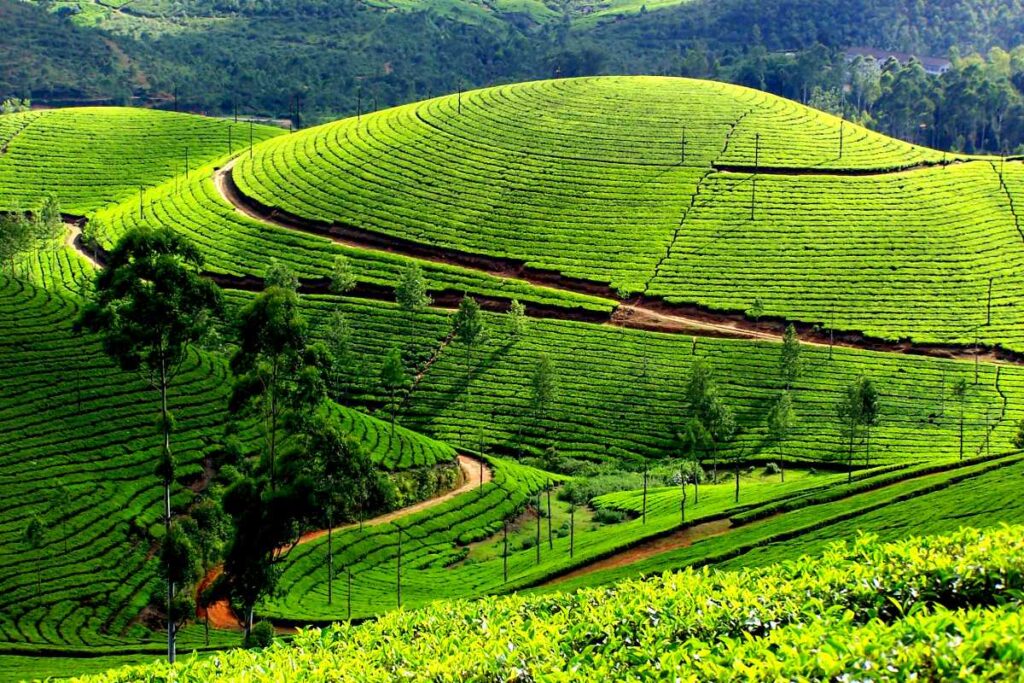
Tea Estate Munnar
Culture in a narrow corridor
Living in coastal towns, river valleys, highland estates and old trading ports produced a genuinely diverse society: Malayalam as the shared language, alongside deep-rooted Hindu, Muslim, Christian and Jewish communities that have coexisted here for centuries.
Faith along the coast
St Thomas Christian tradition holds that the apostle Thomas himself brought Christianity to this coast in the first century CE — long before European contact of any kind, and centuries before Rome’s version of Christianity reached here through the Portuguese. That makes Kerala’s Christian community, collectively, one of the oldest continuous Christian populations anywhere outside the Mediterranean and Middle East, with its own distinct liturgical traditions that developed independently for well over a thousand years before Portuguese Catholicism arrived and, in places, layered on top of or competed with what already existed.
Islam arrived early too, carried by the same Arab trading contact that built the spice economy — the Malabar Muslim, or Mappila, community traces its roots to Arab traders who settled and intermarried along this coast, making it one of the oldest Muslim communities in South Asia. Hindu tradition remains the majority faith and shapes much of the state’s temple architecture and festival calendar, from the mass pilgrimage to Sabarimala to the elephant processions of Thrissur Pooram — a festival built, fittingly, around the same temple-as-community-centre logic found across South India.
A conversation with the monsoon
Kerala’s architecture reflects the same forces as everything else here — it’s essentially a conversation with the monsoon. Steep sloping roofs shed heavy rain, deep verandas and open courtyards manage ventilation in the humidity, and timber construction responds to a climate that stone alone doesn’t suit. The traditional nalukettu house — a courtyard house built around a central open space, historically home to Kerala’s joint-family Nair households — along with temples, churches, mosques and later colonial buildings, all negotiate with the same wet climate in different ways.
Onam and Vishu
Onam, Kerala’s biggest festival, is built around the myth of King Mahabali, a beloved ruler said to return once a year to see his people — celebrated with the sadya feast, flower carpets (pookalam) laid at doorsteps, and the snake boat races already mentioned. Vishu, the Malayalam new year, centres on the vishukkani, an arrangement of auspicious items — rice, fruit, gold, a mirror — meant to be the first thing seen on waking, believed to set the tone for the year ahead. Both festivals, in their own way, are about abundance: exactly the theme this whole landscape has been building toward.
Kerala’s performing arts
Kathakali, Mohiniyattam, Theyyam and the martial art Kalaripayattu all developed within Kerala’s temple and community traditions, deeply tied to storytelling, ritual and religious performance rather than existing as standalone entertainment.
Kathakali: a full night of story
Traditional Kathakali performances could once run an entire night, telling episodes from the Mahabharata and Ramayana through elaborate, almost sculptural makeup (vesham), enormous costumes, and a codified language of facial expression and hand gestures (mudras) that performers train for years, often from childhood, to master. The green-faced heroic characters and the fearsome red-and-black demonic ones are instantly recognisable even to visitors with no context — but the real art is in the years of discipline behind a single expressive glance.
Theyyam: performance as possession
In North Kerala especially, Theyyam occupies a different category entirely — not staged performance so much as ritual embodiment, where a performer, after intense preparation, is understood by the community to actually become the deity or ancestral spirit being invoked, often performed at small local shrines rather than grand temples. It’s one of the most visually striking and least tourist-adapted traditions in the state, still functioning primarily as a religious practice for the communities that maintain it.
Kalaripayattu and Mohiniyattam
Kalaripayattu is often described as among the oldest martial arts traditions in the world, combining strikes, weapons training, and a strong grounding in traditional body and health knowledge — training historically took place in a kalari, a dedicated earthen-floored training space, under a teacher’s close personal supervision for years. Mohiniyattam, by contrast, is a solo classical dance form associated with graceful, flowing feminine movement, its name referencing Mohini, the enchantress form of Vishnu — a very different aesthetic from Kathakali’s dramatic intensity, but drawing on the same deep well of temple storytelling tradition.
Modern Kerala: the Gulf, and back again
Modern Kerala is shaped by two forces that, on the surface, look unrelated but both trace back to the same underlying story: a distinctive approach to development, and a deep, ongoing relationship with the Gulf.
The Kerala Model
In 1957, Kerala elected the world’s first communist government to come to power through the ballot box, and the decades since have produced what development economists often call the “Kerala Model” — a state that, despite modest per-capita income by national standards, achieves literacy rates, life expectancy and public health outcomes that rival far wealthier countries. Early land reforms redistributed agricultural land away from large landowners, and sustained public investment in education and healthcare — building on a literacy movement with roots stretching back well before independence — produced outcomes that remain a genuine point of study for development economists worldwide, even as the state continues to wrestle with modest industrial growth and high youth unemployment relative to its education levels.
The Gulf connection
That last gap — good education, limited local opportunity — is a large part of what drove one of modern Kerala’s defining patterns: mass migration to the Gulf states, accelerating sharply after the 1970s oil boom created enormous demand for labour, healthcare and skilled workers across the Gulf. Kerala’s nurses, in particular, became so central to Gulf and international healthcare systems that Malayali nursing communities exist today in hospitals across the Middle East, Europe and beyond. Remittances sent home by this diaspora — through organisations like NORKA, the state’s dedicated non-resident Keralite affairs department — now represent a substantial share of the entire state economy, visibly shaping everything from local house construction styles to consumer spending patterns in towns with high rates of Gulf migration.
The same Arabian Sea that once brought Arab traders to Kerala’s shores now carries Kerala’s families to the Gulf and back.
It’s a genuinely full-circle story: the same sea that built Kochi’s cosmopolitan trading past now connects Kerala to the Gulf in a very different, very modern way — and it’s part of why Kerala and Oman, in particular, still feel connected across a stretch of water that’s separated them for a very long time without ever really dividing them.
Travelling Kerala
Rather than a list of attractions, it’s more useful to group Kerala the way its geography already does.
Practical notes
- Season. November to February is the most comfortable window; the monsoon (June–September) is dramatic and genuinely worth experiencing but changes how you’ll travel, and the shorter northeast monsoon (October–November) is milder but still worth planning around.
- Houseboats range from simple to genuinely luxurious — worth booking a night or two into any Kerala itinerary rather than treating it as a quick add-on.
- The coast and the highlands feel like different countries within a short drive of each other — build real time into moving between them rather than rushing, since the roads climbing into the Ghats are slower than the distance on a map suggests.
- Fort Kochi rewards slow, on-foot exploration far more than a checklist visit — much of what makes it interesting is in the details: a doorway, a gravestone, a warehouse sign.
- Festival timing can transform a trip — arriving during Onam, Thrissur Pooram or the Nehru Trophy boat race adds a dimension no itinerary planning alone can replicate.
Next in the South India deep dive: Tamil Nadu, the land of temple cities.
Curious about backwaters, spice country, or Kerala’s Gulf-Oman connection firsthand? Message me on WhatsApp.